
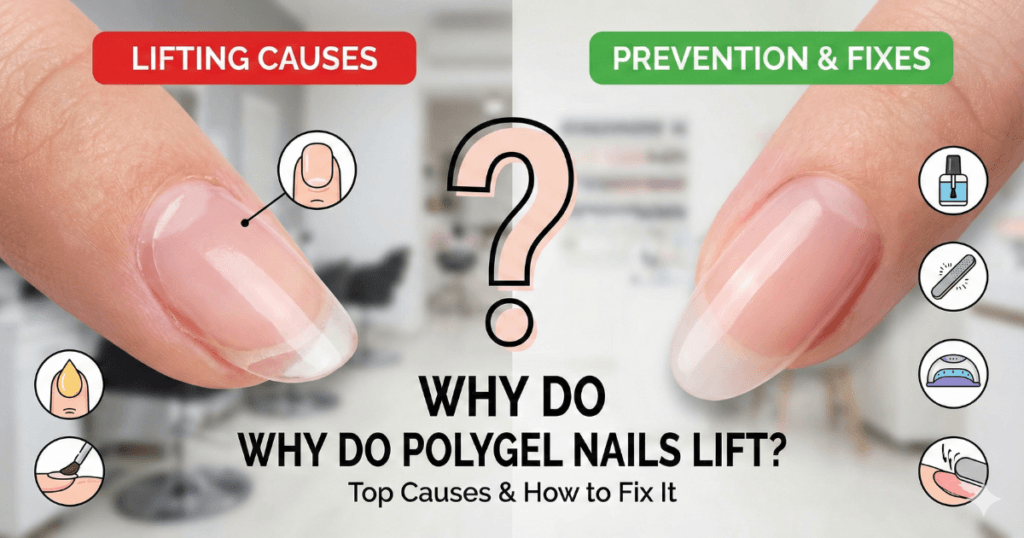
Polygel nails are supposed to be strong, flexible, and long‑lasting—but if yours keep lifting, peeling, or popping off, something in the routine is going wrong. The good news is that lifting is almost never a “bad product” problem; it is usually prep, technique, or curing. Understanding why do polygel nails lift can help you improve your application process.
This guide explains why polygel nails lift, the most common mistakes beginners make, and the exact step‑by‑step routine you can follow so your next set lasts 3–4 weeks.
Read next: Beginner’s guide to doing your own nails at home
What Does “Lifting” Mean In Polygel Nails?
“Lifting” is when the polygel starts to separate from your natural nail plate, usually starting at the cuticle area, sidewalls, or free edge. You might notice a visible gap, a white or cloudy area, or feel the edge catching in your hair and clothes.
Once air and moisture get under that gap, the bond keeps breaking, and the nail can eventually peel or pop off completely. In worse cases, trapped moisture can lead to bacterial infections (often called “greenies”) if the product is left on too long.
Main Reasons Why Polygel Nails Lift
Knowing the reasons behind why do polygel nails lift can enhance your overall nail care routine.
Most lifting problems fall into three big categories: prep issues, product issues, and technique issues.
1. Poor Natural Nail Preparation
If the natural nail is not perfectly clean, dry, and lightly textured, polygel has nothing to grip. Typical prep mistakes include:
- Invisible cuticle left on the nail plate
- Natural nail not fully de‑shined (still glossy)
- Dust left on the nail after filing
- Nails still oily or slightly damp
The nail is a living surface that constantly produces oil and moisture, so if you skip thorough prep, even the best polygel formula will lift.
2. Applying Polygel Onto The Cuticle Or Skin
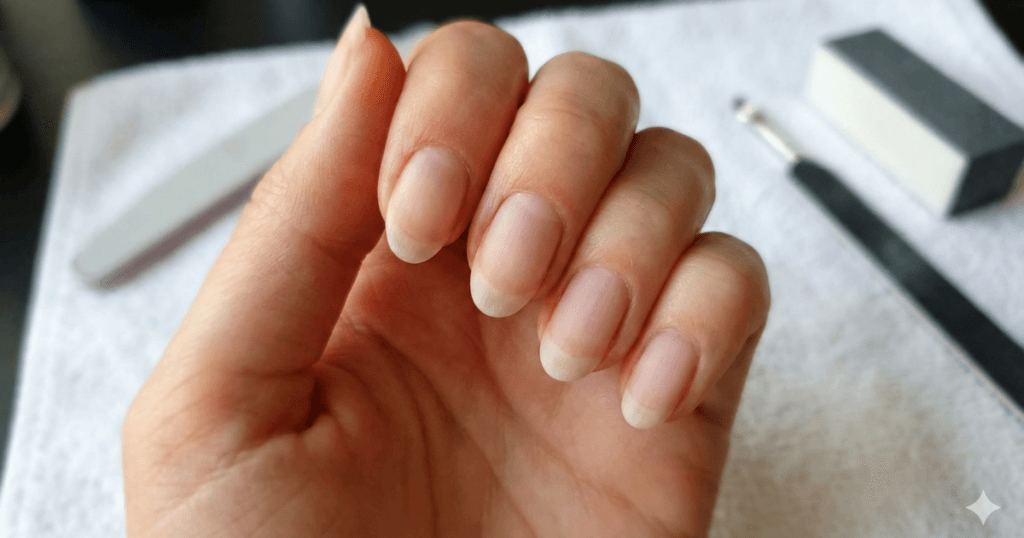
When polygel touches the cuticle or sidewall skin, it creates a tiny ledge. As the nail grows out, that ledge catches on hair, fabric, and water, and lifting starts from that contact area. Professional nail educators recommend leaving a small, consistent gap—about 0.5–1 mm—between the product and the cuticle/sidewalls to prevent this.
3. Too Much Or Too Little Slip Solution
Slip solution helps you move and shape polygel, but too much can weaken the structure and cause soft, under‑cured spots. Common slip‑related mistakes are:
- A brush dripping wet so the product “floats” instead of pressing into the nail.
- Flooding the dual form with liquid before applying.
- Using low‑quality slip that reacts badly with the polygel.
Many experienced users switch to 70%–90% rubbing alcohol as a more controlled slip option instead of heavy, oily solutions.
Recommended: professional slip solution and beginner‑friendly polygel kit
4. Incorrect Curing (Weak Lamp Or Short Cure Time)
If the lamp is too weak or the curing time is too short, polygel may look cured on top but stay soft underneath. This soft core flexes more than the natural nail, which leads to lifting, cracks, or full breakage.
Troubleshooting often points to:
- Low‑wattage lamps (under 36–48 W) not designed for thicker builder products.
- Fingers not positioned correctly inside the lamp, so some nails don’t get full exposure.
- Ignoring the brand’s recommended curing time for polygel (not just gel polish).
(Recommended: upgrade to a salon‑grade 48W UV/LED lamp for even polygel curing
5. Skipping Dehydrator And Primer
Nail dehydrator and primer are the invisible heroes of long‑lasting enhancements. A dehydrator removes surface moisture and oils; primer acts like double‑sided tape between the natural nail and base coat.
Many beginner kits skip these liquids, which is why sets often lift after only a few days. Experienced nail techs especially rely on acid‑free or acid‑based primers for oily nail types or clients with chronic lifting issues.
6. Product Too Thick Or Wrong Structure
Over‑building near the cuticle, sidewalls, or free edge can cause shrinkage during curing or create leverage points that catch and peel. Missing an apex (the stress point in the middle of the nail) can also lead to breakage and lifting under everyday impact.
A balanced structure means:
- Thin at the cuticle and sidewalls.
- Strong apex in the stress area.
- Moderate thickness at the free edge, not bulky.
Step-By-Step Routine To Stop Polygel Lifting
Follow this routine for each set and fill. Consistency is what makes polygel last 3–4 weeks instead of 3–4 days.
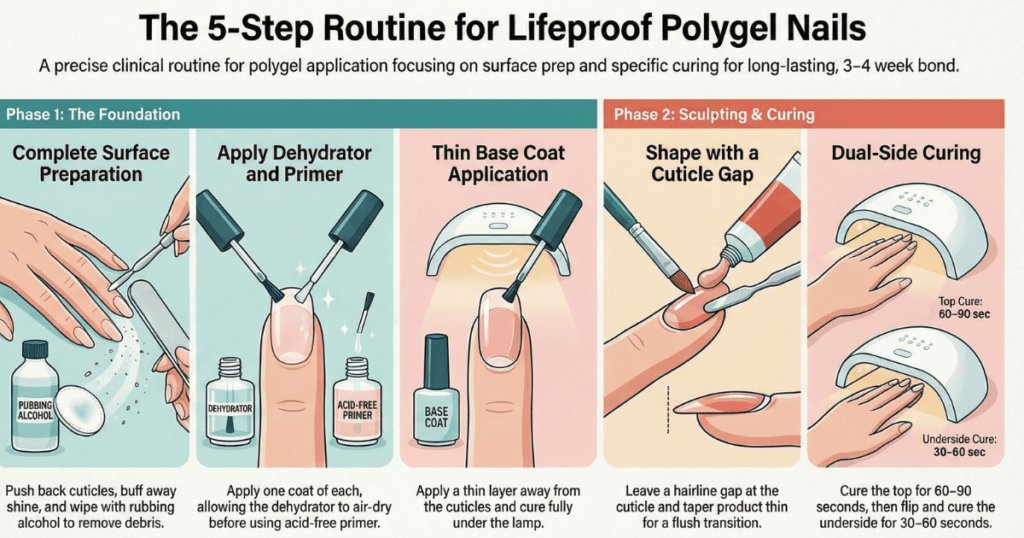
Step 1: Prep The Natural Nails
- Remove any old product and gently file the nail to the desired shape.
- Push back the eponychium and carefully remove invisible cuticle from the nail plate using a cuticle tool or e‑file bit.
- Lightly buff the entire nail surface with a fine‑grit file or buffer until the shine is gone.
- Dust off thoroughly and wipe with alcohol or nail cleanser to remove dust, oil, and residue.
Step 2: Dehydrate And Prime
- Apply nail dehydrator to each nail and let it air‑dry for a few seconds.
- Apply a thin layer of acid‑free (or acid‑based, if needed) primer only on the natural nail.
- Allow it to sit as recommended by the brand before moving on.
Step 3: Apply A Thin Base Coat
- Apply a very thin gel base coat over the natural nail plate.
- Make sure you do not flood the cuticle or sidewalls.
- Cure fully according to the gel brand instructions (usually 30–60 seconds).
- This sticky layer gives your polygel something to anchor into, dramatically improving adhesion.
Step 4: Shape The Polygel With A Small Gap
- Pick up a controlled amount of polygel—avoid huge, unmanageable beads.
- Use a brush with minimal slip solution; blot the brush before touching the product.
- When pressing the form or product onto the nail, start near the cuticle at a slight angle and press slowly to push out air bubbles.
- Crucial: Leave a tiny gap (about 0.5–1 mm) between product and cuticle/sidewalls, and taper the product thin in these areas.
Step 5: Cure Correctly (Top And Underside)
- Cure for the full recommended time (commonly 60–90 seconds in a 48W lamp) with fingers positioned flat and centered.
- If nails are longer or the polygel layer is thicker, flip the hand and cure the underside for an additional 30–60 seconds.
- Check that the product is firm all the way through—not rubbery or overly flexible once the inhibition layer is wiped.
Step 6: File, Refine, And Seal The Edges
- After curing, remove the form and file the shape, keeping the cuticle and sidewalls thin.
- Re‑check apex placement and overall thickness.
- Lightly buff, remove dust, and apply top coat.
- Cap the free edge with top coat to seal the end of the nail and reduce future lifting.
How To Fix A Polygel Nail That Has Started Lifting
Minor lifting can sometimes be repaired, but anything with trapped moisture or a large lifted area should be removed for safety.
When It’s Safe To Repair
You can try a repair if:
- Only a small edge or corner is lifting.
- The area is still dry (no discoloration or smell).
- The natural nail underneath looks healthy.
Quick repair method:
- File away all visibly lifted product until only firmly attached polygel remains.
- Clean the area with alcohol or nail cleanser.
- Re‑apply primer on the exposed natural nail.
- Add a small amount of fresh base coat and polygel to rebalance the structure.
- Cure fully and refine the shape.
When You Must Remove The Nail
Remove the nail completely if:
- The lifted area is large or reaches the center of the nail.
- You suspect water has been trapped for days.
- You see green, yellow, or brown discoloration on the natural nail.
In these cases, gently remove the extension, sanitize the nail, and allow it to rest before applying a new set.
Read next: Step‑by‑step guide to safely removing polygel nails at home without damage
Frequently Asked Questions About Polygel Lifting
How long should polygel nails last without lifting? With proper prep, application, and curing, most polygel sets can last 3–4 weeks before needing a fill or rebalance. If lifting starts within a few days, it almost always points to issues with prep, product touching the cuticle, or incorrect curing.
Why are my polygel nails lifting at the cuticle only? Cuticle‑area lifting usually means invisible cuticle was left on the nail plate, the product was applied too close to or on the skin, or the area was too thick and shrank during curing. Improving cuticle prep and leaving a clean 0.5–1 mm gap typically solves this.
Why do my polygel nails pop off the next day? If nails pop off within 24 hours, the bond failed completely. Common causes include no dehydrator/primer on the natural nail, nails not buffed or still oily, base coat skipped or under‑cured, or polygel cured over skin instead of just the nail plate.
Is it okay to glue a lifted polygel nail back down? Nail glue can temporarily hold a lifted extension, but it may trap bacteria and moisture, increasing the risk of infection or “greenie” nails. It is safer to remove any significantly lifted nail, sanitize the area, and re‑do the enhancement correctly.

Udeshika
Nail Art Expert & Founder, BlueBeek 💅
Udeshika is a professional nail artist with 7+ years of experience creating salon-quality nail art at home. She founded BlueBeek to help beginners master nail art without expensive salon visits.